About Co-Kinetic

One profession. 27 years. The same way of working the whole time.

Co-Kinetic has served MSK clinicians since July 1999: first as a clinical journal, with the patient leaflets that soon followed it into waiting rooms across the country, then as a marketing platform, and now as a system that reads a clinic's website the way an AI does and writes what is missing. Through all of it, one method. Everything we produce is designed to be useful, to add value, to educate, and to show the clinician's expertise and authority, because that is what builds trust, and trust is what brings patients through the door. None of it is left to chance.

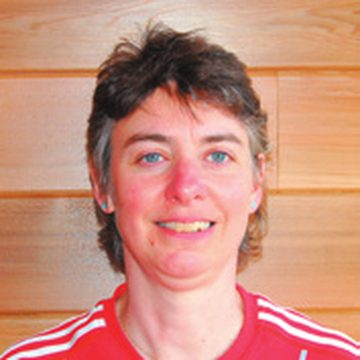
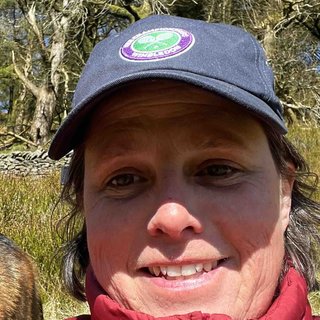
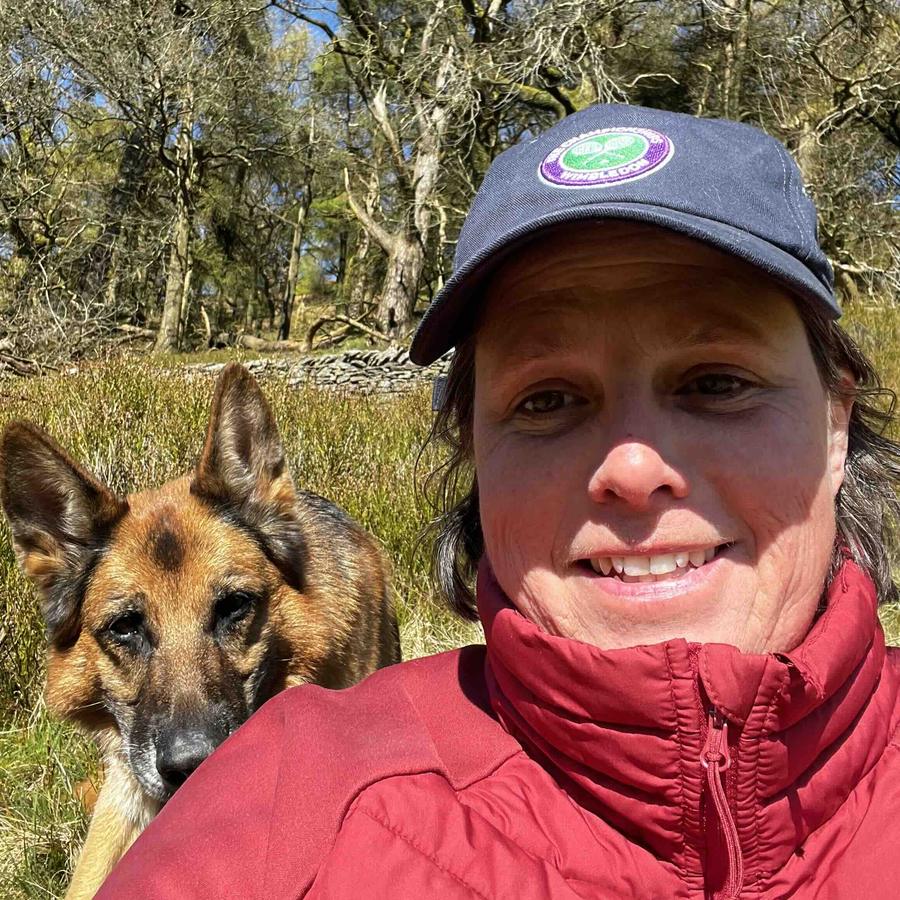
Tor Davies, founder of Co-Kinetic, outdoors with her dog Lupa
27
years serving MSK clinicians, since 1999
204
clinic websites assessed so far live count
115
five-star reviews
100
issues of an award-winning clinical journal, 1999 to 2024
2026
Named Best Physical Therapy Marketing Platform, GHP Global Excellence Awards
The story

Five chapters

1999the first issue

A journal, and patient leaflets from day one

In 1998 Tor Davies, a former physiotherapist with a sport and exercise science degree and two years as a medical journalist, gave up her job to start a journal. She sold her parents ten shares for £10,000, a hard-fought investment that paid for the logo, the design of the first issue and the first print run, and in July 1999 Sportex Medicine went out. It was a translational journal: clinical research turned into something a busy clinician could use, with patient resources from the first issue, because a clinician's job does not end when the patient leaves the room. From there on she was flying by the seat of her pants: stuffing renewal letters at eleven at night every quarter, in the days before email, for a stupidly low £26 a year for four issues of a full-colour journal. The parents were paid back, with interest, five years later.
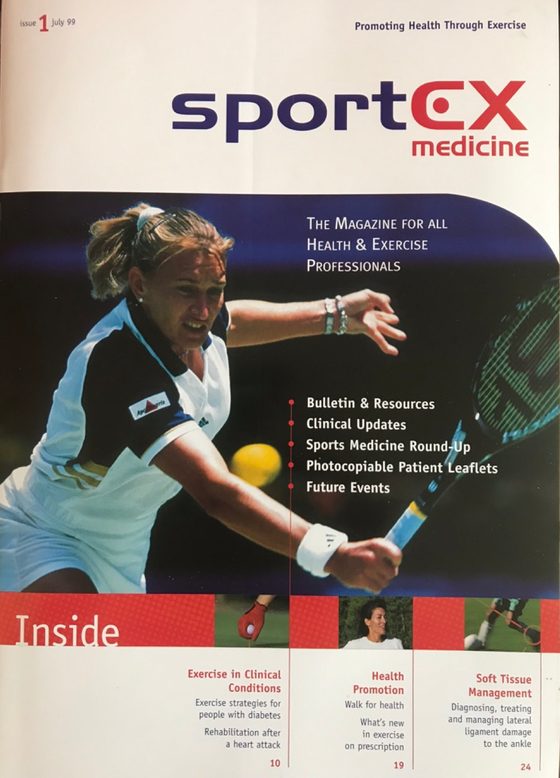
The first issue of sportEX Medicine, July 1999, with Steffi Graf on the cover
2002the charities

Several million leaflets, and the people who gave us the breaks

A series of patient leaflets on physical activity for health, a subject almost nobody was covering, caught the eye of the British Heart Foundation, which commissioned several million BHF-branded copies. Diabetes UK, Asthma UK, Walk 4 Health and Physio First followed. Those nods, Tor says, "gave me the much-needed confidence that I was on the right track".

But a business survives on the people who give it a break. Kim Harvey at Physio First, the man with the radio voice, rang out of the blue and, with Sally Roberts, put the journal in front of 3,500 private physiotherapists every quarter, an audience we could never have reached alone. That deal kept us alive. Joan Watt, founder of the Sports Massage Association, rang late one night to say the SMA was about to fold and ask if there was anything we could do; we took on its management for a fixed fee per member and got it back on its feet. Kris Tynan and Tim Webster of the Body Life Conference gave us spare room at Leisure Industry Week, and with six weeks' notice we ran the first SMA conference day, where Joanne Elphinston had a room full of therapists rolling about on the floor. At the peak we were running close to 200 courses a year, for everyone from MSK professionals to the remedial instructors at Headley Court, the Defence Medical Rehabilitation Centre, and building e-learning for the YMCA. It is about the people.
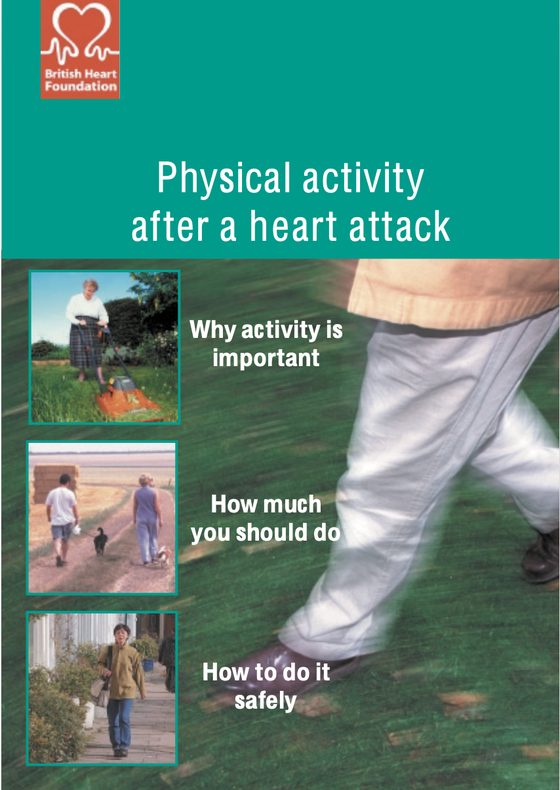
British Heart Foundation leaflet: Physical activity after a heart attack
2017the pivot

From publishing to marketing, without the salesy aftertaste

By 2015 the brand had become Co-Kinetic, and by 2017 the internet was awash with free clinical content. It was time to take stock, so Tor asked more than 1,500 therapists worldwide one question: "What is the one thing about your business that keeps you awake at night?" The answer was not knowing how to generate a reliable, controllable flow of new patients without falling back on offers and discounts. So we built on what we had always done. Each clinical topic became a complete educational campaign: an evidence-based article for the clinician, and for their patients the blog posts, emails, leaflets, social posts and printable posters to go with it, with a platform to send it all. Around 51 campaigns followed. The Marketing Grader, the 80:20 webinars, the Built on Trust course and the beginnings of a marketing manual of the same name taught thousands of clinicians how to market by educating, delivering value and building trust.

A range of Co-Kinetic content marketing campaigns for therapists
2026the system

Content that has to prove it worked

The campaigns had a limit: they were the same for every clinic. When AI arrived, Tor built herself a pipeline for researching and writing campaigns, then, in October 2025, started building it as a product clinics could use for any topic. She never launched it. There was no point in a clinic generating more content unless it could be shown to move the needle. So she built the website assessment instead: a system that reads a clinic's website the way an AI reads it, asks the AI tools what they say about the clinic, works out what the clinicians should be known for, writes it under their names and measures what changed. Marketing is notoriously hard to prove; a former physio and sports scientist was not going to ask anyone to take it on faith. Twelve months later, almost to the day, it works end to end: the Clinical Content System. Many clinics already pay someone to produce SEO content for their website. This replaces that, with content that is researched, written under your clinicians' names, and measured against what the AI tools actually answer.

Image: the page inventory screen, "where your content stands right now"
Nextwhere this is going

Every area of marketing, connected, with the clinician at the centre

Each product Co-Kinetic sells today is one piece of a single marketing partner for private practice: one that knows a clinic's patients, keeps its website current and findable, tells the right people the right things at the right moment, and acts within limits the clinic sets. Behind that is an older idea from the 100th issue of the journal: that MSK clinicians, with their holistic training and their place in the community, are uniquely placed to be the trusted centre of local health. A community needs its good clinicians to be the ones patients are sent to. That is why it matters which clinics the AI names.

See how it all fits together: the four stages, in order, and what we do at each one →
You sends writes analyses plans watches suggests campaigns and emailscontentthe datawhat to run nextthe calendarand asks you
An agent working on your behalf, within limits you set.
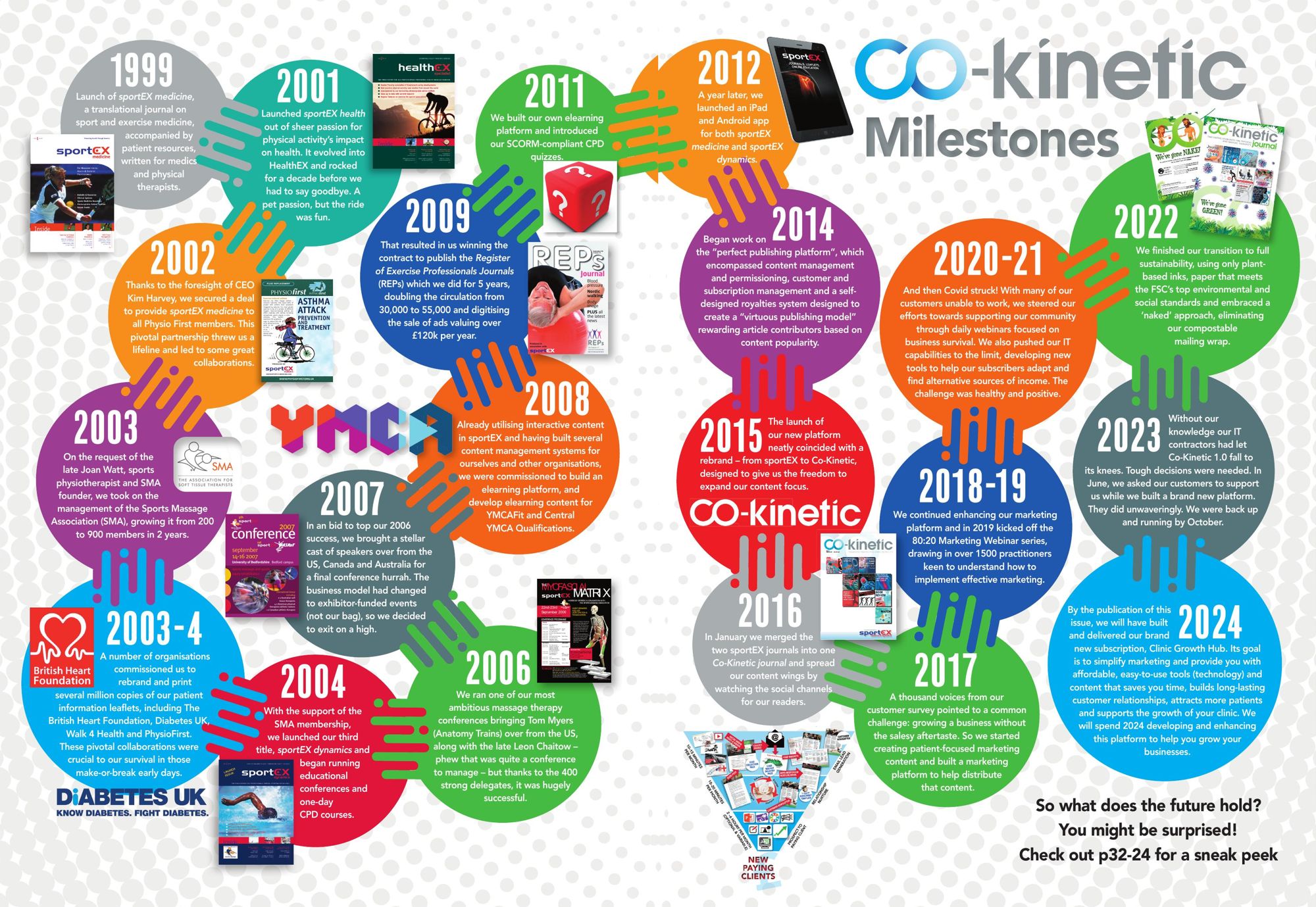
Co-Kinetic milestones, 1999 to 2024, from the 100th issue of Co-Kinetic Journal
Milestones, 1999 to 2024, as they appeared in the 100th issue.
The people

Behind the pages: the people who made the story

The chapters above are the events. A business is the people who were there at each step: the ones who gave it a break, the ones who wrote for it, edited it and taught on it, and the ones it has lost. Over 25 years the journal had several hundred contributors and several thousand contributions; Tor gave up trying to count. This is a first snapshot, drawn from the 100th issue and from memory, and it will keep growing. Where we can, we link to people, because most of them are still doing remarkable things. If you are missing, it is not for lack of gratitude; tell us.

The editors

1999 to 2008

Sharon Turl MCSP, who was also editor of the BMJ and ACPSM collaboration Physiotherapy in Sport.

Bob Bramah
Bob Bramah

2004 to 2024

Bob Bramah MCSP, physiotherapist, massage therapist and former SMA board member, with us for nearly as long as Tor: advisor and editor to sportEX dynamics and, from 2008, the Journal Watch editor whose spicy one-line comments at the foot of each review were, for many readers, the first thing they turned to.

Lynn Booth
Lynn Booth

2006 to 2011

Lynn Booth MCSP, then Chair of the Association of Chartered Physiotherapists in Sports Medicine, who co-ordinated physiotherapy and sports medicine services at major events including the 2012 Olympics and the 2014 and 2022 Commonwealth Games.

Dylan Morrissey
Dylan Morrissey

2011 to 2018

An editorial board led by Professor Dylan Morrissey and the sports medicine team at Queen Mary University of London.

Kath Thomas
Kath Thomas

2018 to 2024

Kath Thomas, South African sports physiotherapist, in-house editor and technical writer, who wrote no fewer than 45 in-depth evidence-based reviews and 37 content marketing campaigns.

The team behind every issue

Debbie Asher designed every issue from the second one onwards and could turn her hand to anything. Alison Sleigh PhD sub-edited, forever being poached by the PhD authors she worked with. Sheena Mountford kept the journal and the subscriptions on the rails with a fierce eye for detail.

The ones who gave us the breaks

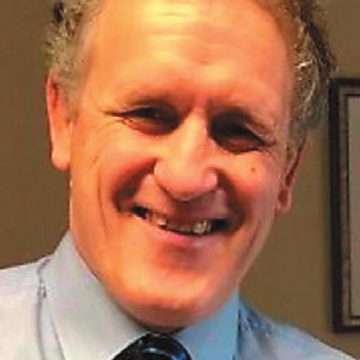
Nick Webborn
Nick Webborn
Paul Jackson
Paul Jackson
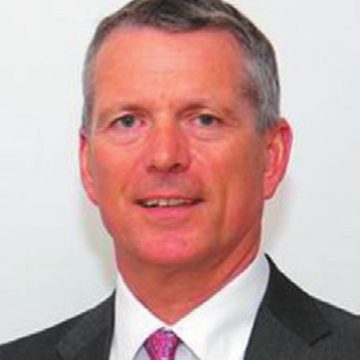
Simon Kay
Simon Kay
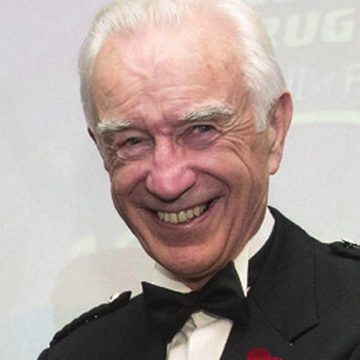
Donald Macleod
Donald Macleod
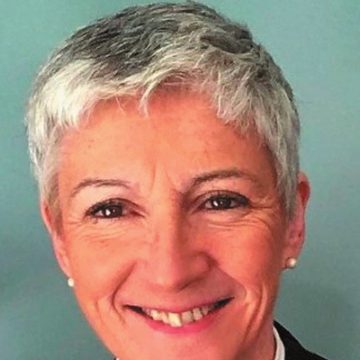
Domhnall MacAuley
Domhnall MacAuley

The early advisors

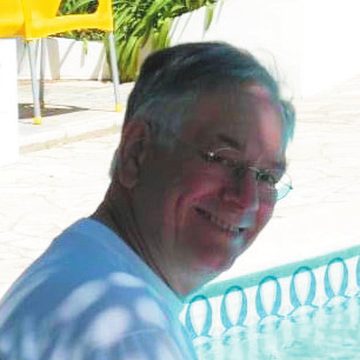
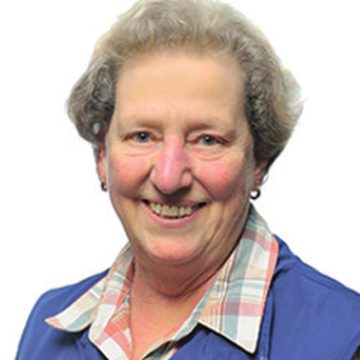
Prof Nick Webborn OBE, Dr Paul Jackson, Dr Simon Kay, Donald Macleod and Domhnall MacAuley got a brand-new journal into the right medical hands for long enough to survive. Nick and Paul were groundbreaking in sport and exercise medicine, and Nick has gone on to very big things.

Helena Sturridge
Helena Sturridge

The mentor

Helena Sturridge gave Tor her first pivotal journalism job and cautioned her against the subscription route because it was hideously hard. She was right about the hard part. Tor ploughed on anyway.

Kim Harvey
Kim Harvey

The ones who kept us alive

Kim Harvey, the man with the radio voice, and Sally Roberts at Physio First put the journal in front of 3,500 private physiotherapists every quarter. Nicki Cooper at the British Heart Foundation commissioned the first of several million leaflets. Those two decisions are why there is a 27-year story to tell.

The first conference

Kris Tynan and Tim Webster of the Body Life Conference gave us spare room at Leisure Industry Week, and with six weeks' notice we ran the first SMA conference day, where Joanne Elphinston had a hall full of therapists rolling about on the floor.

Exercise as medicine

Dr William Bird and Charlie Foster were central when we were trying to get the exercise-for-health movement moving in the early 2000s, long before it was fashionable.

Handspring Publishing

Andrew Stevenson and Mary Law, whose remarkable books gave us standout excerpts for years: Andrzej Pilat, David Lesondak, Wilbur Kelsick, Marnie Harman and Niamh Moloney, Janet Penny, Susan Lowell de Solórzano, Ann and Chris Frederick, Giles Gyer and Jimmy Michael, Sharon Wheeler, Jules Mitchell, Doreen Killens, Diane Lee, David Zulak, Philip Austin and the late Leon Chaitow.

Our most prolific contributors

Dr Dylan Morrissey · Dr Simon Kay · Dr Simon Lack · Paula Clayton · Julian Hatcher · Joan Watt · Ruth Duncan · Dr Joe Brence · Stuart Hinds · Prof Cathy Speed · Julian Baker · Ron Alexander · Nick Dinsdale · Jack Chew · James Earls · Joanne Elphinston · Dr Paul Jackson · Dr Chris Norris · Dale Forsdyke · Rachel Fairweather · Susan Findlay · John Sharkey · Dr Jason Masek · Ben Cormack · Dr Sarah Morton · Lee Herrington · Daniel Lawrence · John Gibbons · Wayne Gill

A goldmine of knowledge, time and again, tackling topics big and small, and getting us out of more than one scrape when a deadline was missed.

Honouring our guiding stars

Joan Watt

Joan Watt, 1941 to 2023

At the forefront of sports physiotherapy for more than fifty years, from the 1970 Commonwealth Games onwards; the first female president of Scottish Athletics and the driving force behind the Sports Massage Association. Her late-night call when the SMA was about to fold brought Co-Kinetic in to run it. She ran courses for us, wrote for us, and was, in Tor's words, her professional mum. Tor still misses picking up the phone for her wise counsel.

Paula Clayton

Paula Clayton, died 2021

Our most prolific contributor and the most superb trainer and communicator: pragmatic, down to earth, a spade called a spade. She began as a massage therapist, qualified as a physiotherapist with flying colours, became an Olympic physio and brought Jessica Ennis-Hill into the SMA. Whatever your experience, Paula made you feel you could change the world with what she had just taught you. There will never be anyone like her.

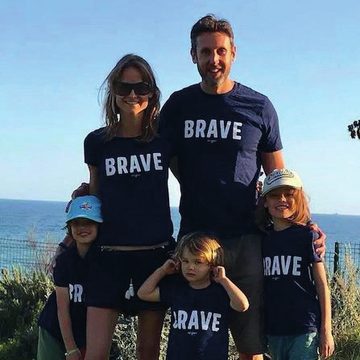
Alexa Smallwood with her family

Alexa Smallwood, 1979 to 2019

Our breath of fresh air. Alexa looked after subscriptions in the early 2000s while training as a physiotherapist at St George's, arriving at the office after a day's study to process the subs. Diagnosed with a rare cancer in 2018, she spent the time she had raising money and awareness for it. She is the reason Tor bought a campervan.

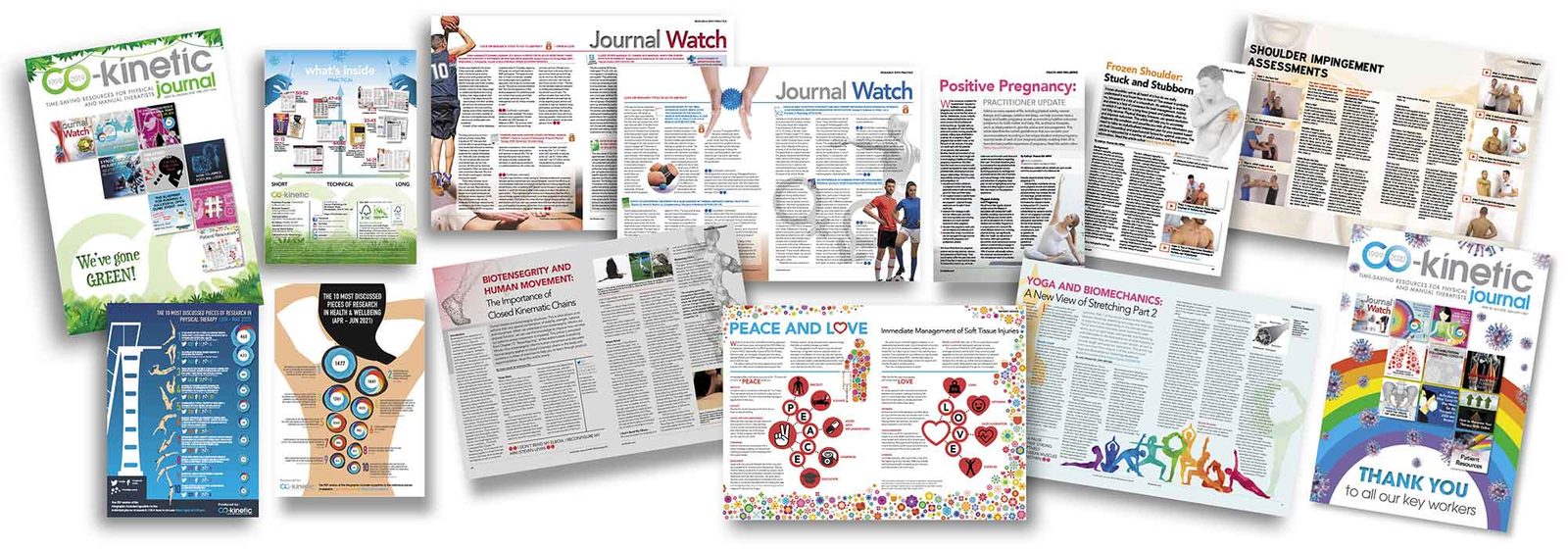
Pages from Co-Kinetic Journal, written by the profession for the profession
How we work

A small team, built AI-natively, with the day-to-day taken care of

Co-Kinetic is deliberately small and deliberately modern. The platform was built with AI from the ground up, and so was the company around it. Every support ticket is analysed every day, and the help library is written and updated from the questions customers actually ask, so most answers are there before anyone has to wait for them. Our own AI agents handle the routine: monitoring, documentation, the first draft of almost everything.

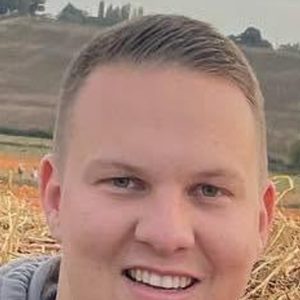
That takes the day-to-day off the founder, which is the point. Tor's job is to add to the system, fix what needs fixing, and talk to customers. Ash builds, every day. Sam advises on the technology. The work that needs a human gets one; the work that does not, does not.

And the content a clinic publishes through Co-Kinetic is the clinic's. If a clinic ever stops, everything it has published stays exactly where it is.

Tor Davies
Founder

Tor Davies

Former physiotherapist, sport and exercise scientist, publisher of Co-Kinetic Journal for 25 years and 100 issues. Builds the system, sells it, and still reads what it writes.

Ash, developer
Developer

Ash

Full-time developer. Builds and ships the platform every day.

Sam Bacon, technical advisor
Technical advisor

Sam Bacon

Advises on architecture, security and the technology choices behind the platform.

Recognition

Awards, attributed

2026Named Best Physical Therapy Marketing Platform (UK), GHP Global Excellence Awards
2024Best Physical Therapy Marketing Specialists (UK), GHP Global Excellence Awards
2024Shortlisted, Top 5 Patient Experience Solutions Providers UK, Healthcare Tech Outlook

Our content has been trusted by leading health and wellbeing organisations

British Heart FoundationDiabetes UKAsthma UKYMCA FitPhysio FirstRegister of Exercise Professionals

What people say about working with us

The journal

100 issues, 1999 to 2024, and not one missed

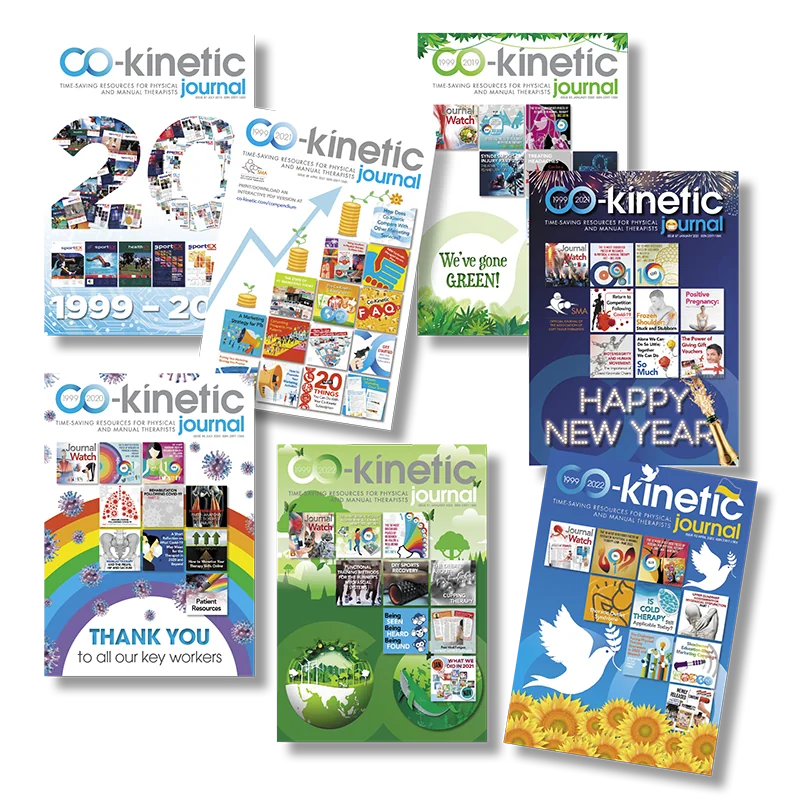
Sportex Medicine became Co-Kinetic Journal, and over 25 years it published clinical education, evidence reviews and patient resources for clinicians around the world. The 100th issue, in April 2024, was the last. The whole run is free to read.

Co-Kinetic Journal covers, 1999 to 2024

56 publications on issuu.com/co-kinetic.

The 100th anniversary issue, April 2024: the whole story of the first 25 years. Open it full screen.

See what we do, starting with the free bit

Run the free check

What AI is telling your patients about your clinic today. A minute, no card.

Check whether AI recommends your clinic

How it fits together

The four stages and the products on each.

How it works

Talk to Tor

About the review or the Clinical Content System.

Book a chat